If you’re wondering whether driving in Tunisia is a good idea for your trip, the short answer is yes — it’s manageable and genuinely rewarding for foreign drivers, as long as you know the basics beforehand. Here’s what you need to know to feel confident behind the wheel.
Speed limits and right-of-way Tunisia drives on the right, same as continental Europe and North America. Speed limits are generally 50 km/h in built-up urban areas, 90 km/h on national roads outside towns, and 110 km/h on motorways. Speed cameras are common on highways and at the entrances to cities, so it’s worth staying attentive rather than relying on guesswork. At unmarked intersections, traffic coming from the right generally has priority unless signs say otherwise. At roundabouts, vehicles already circulating have the right of way — treat it the same way you would in France or Italy, entering only when there’s a safe gap.
Road signs and language Road signs in Tunisia follow the European style and are typically written in both Arabic and French, so if you’re familiar with standard European road signage, you’ll recognize most of what you see. Seatbelts are mandatory for everyone in the car, front and back, and using a handheld phone while driving is prohibited — hands-free systems are fine.
Police checkpoints — what to expect Police checkpoints are a normal part of driving in Tunisia, especially on major routes and near city entrances. They’re routine, not a cause for concern. When stopped, you’ll typically be asked to show your driving license, passport (or national ID for EU citizens), and your rental agreement. It’s a good idea to keep these documents accessible in the car rather than buried in a suitcase, since officers may ask for them during a routine check. Staying calm, polite, and cooperative makes these stops quick and straightforward.
Parking in major cities Finding street parking in city centers like Tunis, Sousse, or Sfax can be tricky, particularly near medinas where space is limited. Your safest bet is to use designated parking lots rather than searching for street spots — it’s usually less stressful and keeps your car more secure. Always take valuables out of sight when you park, as a general precaution in any unfamiliar city.
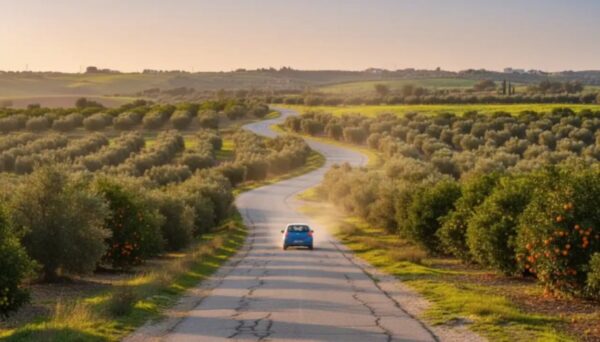
Safety tips for a smooth trip Driving in Tunisia is comparable to driving in southern Europe — cities like Tunis or Sousse have a livelier, more assertive traffic style than you might be used to, but it’s nothing unusual for anyone who’s driven in Rome, Naples, or Athens. A few tips make a real difference: – Avoid night driving on rural or secondary roads when possible — visibility is lower and road markings can be inconsistent outside major routes. – Watch for livestock and slower-moving vehicles on countryside roads, especially near villages — it’s common and just requires a bit more attentiveness than motorway driving. – Take it easy on rural roads in general — occasional potholes and unmarked bends are more likely away from the main highways, so a relaxed pace goes a long way. – Keep your fuel tank topped up in rural or southern areas, where stations are more spread out.
So, is it safe to drive in Tunisia? Yes — with a bit of preparation, driving in Tunisia is a safe and practical way to explore the country. The main challenges aren’t really about danger, they’re about adjusting to a slightly different driving culture: a little more assertive in cities, a little quieter and slower-paced in the countryside. Stick to sensible speeds, stay alert at checkpoints and roundabouts, avoid unfamiliar roads after dark, and you’ll find that self-driving opens up a version of Tunisia that’s much harder to reach any other way.
Thinking about renting for your trip? Browse our Our Vehicles page to find a car suited to your route, whether that’s a compact city car or something better equipped for longer rural stretches.